Spring Creek Drilling
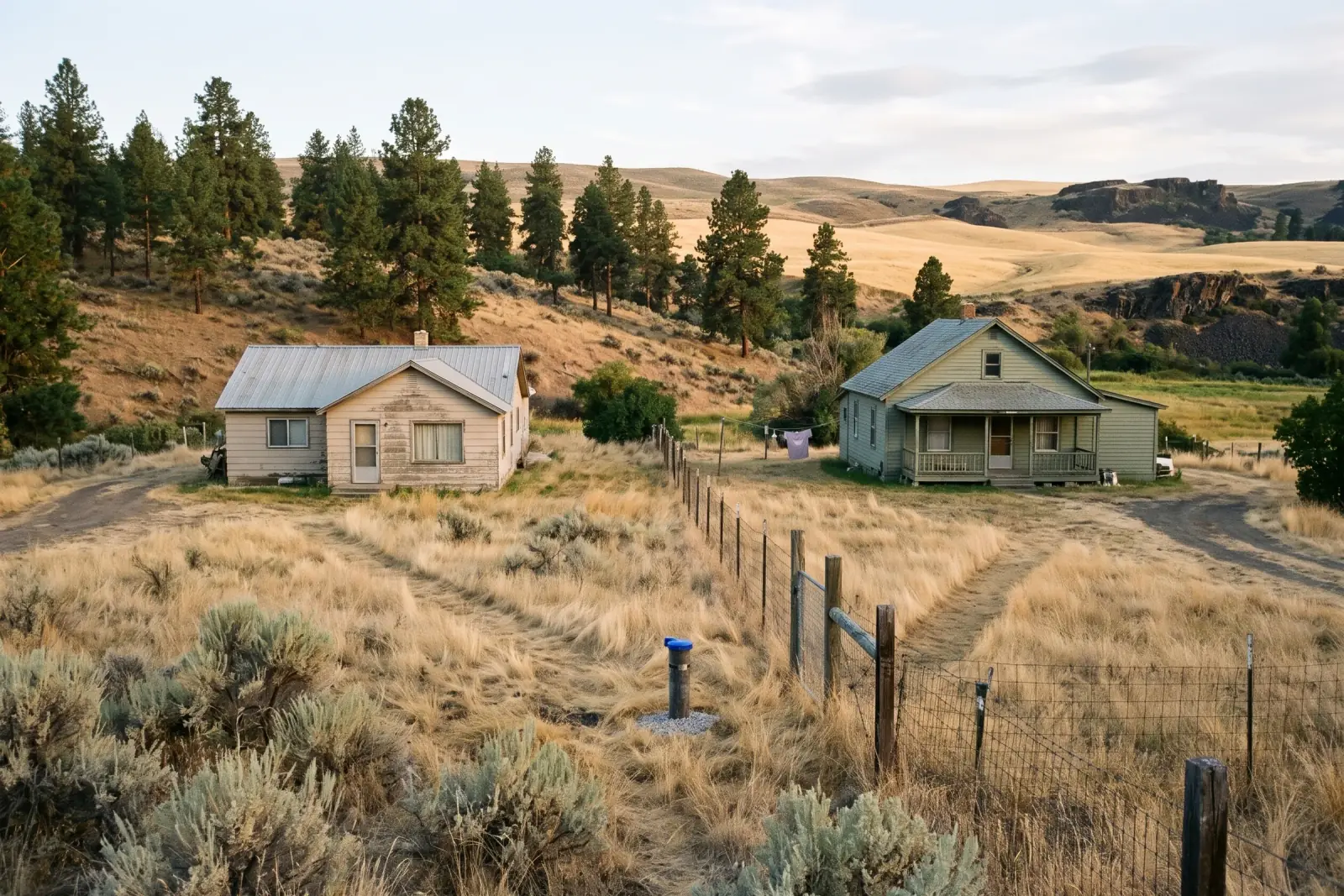
Yes, two houses can share one well in Washington, and in Spokane, Stevens and Lincoln counties a well serving two homes generally isn't regulated as a public water system. The limits are about water and paperwork: both homes together have to stay within the 5,000 gallons a day a well can use without a water right, a third home turns the well into a Group B water system that needs state or local health approval, and the owners need a written agreement.
Below: the rules, what each county needs for a building permit, and what a shared well agreement should cover. We drill wells; the agreement is a job for a real estate attorney, and nothing here is legal advice.
How Many Homes Can Share a Well in Washington?
Drinking water and water rights rules together draw these lines:
- One home: a private well, the owner's responsibility once it's built (SRHD).
- Two homes: a shared well. On paper it's the smallest kind of public water system, but those rules generally don't apply to it.
- Three to 14 homes: a Group B public water system, which needs its design approved before it's built.
- 15 or more homes: a Group A system, and a municipal use that needs a water right permit (Ecology Publication 19-11-090). A system serving an average of 25 or more people a day for 60 or more days a year is also Group A (RCW 70A.125.010).
All of them share one water limit: without a water right, a well can supply "single or group domestic uses" of up to 5,000 gallons a day in total (RCW 90.44.050).
Is a Shared Well a Group B Water System?
Technically, yes. State law makes any system that pipes drinking water a public water system, except one serving a single family home, or four or fewer homes all on the same farm (RCW 70A.125.010), meaning land devoted to commercial livestock or crops (WAC 246-291-010). Any public system that isn't Group A is Group B, so a well serving two homes (not on the same farm) is a Group B system by definition.
In practice, the state's Group B rules don't apply to one or two service connections, unless the local board of health has adopted requirements for them or the Department of Health decides they're needed to protect public health, such as when a connection serves a licensed child care center or adult family home (WAC 246-291-005). The department says its rule eliminates "all requirements for most one connection and two connection Group B systems" (DOH). In our counties:
- Spokane County: the Department of Health regulates all public water systems (SRHD), and its map shows no local health district role in Group B systems (DOH 331-720), so the state rule applies.
- Stevens County: the Northeast Tri-County Health District's Group B regulation also doesn't apply to one or two connections unless the health officer decides it's needed (NETCHD Regulation 04-2023).
- Lincoln County: Lincoln County Public Health defines a private water system as "any well that serves a single household or two single-family households," regulated by neither the Department of Health nor Lincoln County Public Health (Lincoln County Public Health).
Watch the third connection: for a Group B design, the Department of Health counts an accessory dwelling unit in a separate building as its own connection, though an apartment inside the main house isn't one (DOH design guide). A house with a detached ADU plus a neighbor on the well makes three.
A Group B system needs an approved design, generally from a professional engineer (WAC 246-291-120), and a sanitary control area of at least 100 feet around the well, protected by a covenant recorded on every property inside it (WAC 246-291-125). Planning a third home? Talk to the regulator before siting the well; our commercial well page lists who that is in each county.
One 5,000-Gallon Limit for Both Homes
Without a water right, a well can supply household use up to 5,000 gallons a day, plus stock water and up to half an acre of noncommercial lawn or garden (RCW 90.44.050; more in our well permit guide). On a shared well, that's 5,000 gallons for both houses together. Ecology's guide adds (Ecology Publication 19-11-090):
- It's a daily cap, not an average.
- Up to 14 homes can share a group domestic system under the exemption.
- A project shares one limit. For a residential subdivision, the limits apply to the whole project, half acre of lawn included, even with separate wells. The State Supreme Court ruled in 2002 that a whole subdivision is held to the exemption's limits (Ecology v. Campbell & Gwinn). Common ownership, shared infrastructure and timing all count, so if you're splitting land to add a home, ask the county early.
Two areas add limits of their own:
- Little Spokane and Colville watersheds (around Deer Park, Chattaroy, Colbert, Elk and Mead, and the Colville valley around Colville, Chewelah and Valley): each new home on a permit-exempt well is limited to an annual average of 3,000 gallons a day per connection, and the county collects a $500 fee and records the limits on the title (RCW 90.94.020). If you're adding a home to a well drilled before January 19, 2018, ask the county how the rules apply.
- The Spokane Valley-Rathdrum Prairie aquifer: a water supplier that can serve the property comes first; otherwise a new permit-exempt well needs mitigation, which Ecology's aquifer bank provides free for a single home (WAC 173-557-020). Ask the county about a well for two. See Spokane Valley.
What the County Needs for Two Homes on One Well
Each home's building permit needs "evidence of an adequate water supply" (RCW 19.27.097). Here's what each county asks for, and how a second home changes it:
- Spokane County: the health district's pump test standard is at least 1,440 gallons a day (one gallon per minute) "per commercial building or single-family residence," so a well for two houses has to show at least double, plus the well report and coliform and nitrate results from an SRHD-approved sampler (SRHD).
- Stevens County: Land Services asks for at least 800 gallons a day for one home and 1,600 for two, held over four hours, plus lab results under two years old for coliform, nitrate, arsenic, lead and uranium. It can approve storage when quantity is low. The guide dates from 2018, so confirm with Land Services (Stevens County).
- Lincoln County: proof of potable water, such as the well log, goes with the septic permit, which comes before the building permit (Lincoln County).
Yield matters more with two households. In the state's well reports, the median tested yield is 13 gallons per minute in Spokane County, 7 in Stevens and 20 in Lincoln, and half tested at or below that; our well depths by town pages show local numbers. Also ask the building department whether it wants a recorded agreement or easement with the second home's permit.
Where a Shared Well Can Go
A shared well needs the usual setbacks from both homes' septic systems: 100 feet from each drainfield, including approved proposed drainfields and reserve areas, 50 feet from each septic tank, and 5 feet from any building, never inside a house, garage, barn or storage building (WAC 173-160-171). The state rule has no property-line setback, so it can sit near the line between two lots if it clears both septic systems.
Whichever lot it's on, the other owner will want a recorded right to reach the well, service the pump and run water lines and power, so plan the easements with the site. We pick the exact spot with you on site before drilling, with setbacks and rig access in mind. See choosing a well location.
Sharing a Well vs. Drilling Your Own
- Cost: drilling a home well here typically runs $5,000 to $25,000 or more, with the pump system separate. Sharing splits one well, pump and tank between two owners.
- Space: on small lots, setbacks from two septic systems can leave room for only one well.
- Outages: when a shared pump fails, both homes are out of water until it's fixed.
- Water: both homes share the well's yield and the 5,000 gallons a day, so a big garden next door affects you.
- People: the neighbor you set it up with may sell to someone you've never met, and buyers and lenders will ask about the agreement.
- Growth: a third hookup, even a detached ADU, makes it a Group B system.
If both lots have room, separate wells keep things simple. If not, a shared well with a solid agreement can be the better fit.
What to Put in a Shared Well Agreement
Put it in writing, ideally before the second house hooks up. A good agreement covers:
- Ownership: which parcel the well is on, who owns the well and equipment, and each home's share.
- Easements: access to the well, and the right to run and repair water lines and power across each other's land.
- Costs: how the pump's power bill and repairs to the pump, tank, wiring and shared lines are split, who can call for repairs, and who pays for a replacement well someday.
- Water use: keeping combined use within 5,000 gallons a day (and 3,000 per home in the Little Spokane and Colville watersheds).
- Testing: who tests, how often, and how results are shared. The Department of Health recommends testing every year for coliform bacteria and nitrate (DOH).
- New hookups: none without both owners' written consent.
- Selling and disputes: that it carries over to future owners, how disagreements get settled, and what happens if one owner stops paying.
We haven't found a shared well agreement template from Spokane, Stevens or Lincoln County, and a fill-in-the-blank form can't account for your parcels and easements. Have a real estate attorney draft or review it, and record it with the county so it's on the record for both parcels.
Buying a House With a Shared Well
Washington's seller disclosure form has a box for a "private well serving only the subject property," which a shared well isn't, and asks whether a shared water source has written agreements and an easement for access and maintenance (RCW 64.06.020). Before you're committed:
- Read the recorded agreement. If there isn't one, ask whether one can be signed and recorded before closing.
- Ask your lender early. For FHA-insured loans, HUD defines a shared well as one serving two to four homes "where there is a binding Shared Well Agreement between the property owners that meets FHA requirements" (HUD Handbook 4000.1 glossary).
- Look up the well report in Ecology's Well Report Viewer for the depth and tested yield, and confirm which parcel the well is on.
- Ask about the history: the pump's age, past repairs, who paid, and recent water tests.
Our guide to buying a house with a well covers the rest, and buying land without a well covers bare parcels.
Get a Free Estimate for a Shared or Separate Well
Whether it's one well for two homes or a well for each, we drill the well and handle the notice of intent and the well report as part of the project.
Send us the address or parcel number. We'll check the well reports nearest your land and give you a free estimate. Request your free estimate, or see how a home well comes together on our residential well drilling page.