Spring Creek Drilling
How Much Water Does a Home Need?
The U.S. Geological Survey estimates that each person uses about 80 to 100 gallons a day indoors, and the EPA puts the average American family at more than 300 gallons a day at home. What matters for a well is the rate it can deliver when everyone is using water at once. The National Ground Water Association says most homes need a well that can produce 7 gallons per minute, and where a well can't, storage that holds at least a day's supply. More in our guide to how many gallons per minute a well should produce.
Outside, Washington's permit exemption covers watering up to half an acre of lawn or noncommercial garden, on top of household use. Wells in our area vary a lot: around Mica the median well is 400 feet deep, while around Medical Lake it's 130. See typical depths and yields by town.
Proving Water for Your Building Permit
Washington law (RCW 19.27.097) requires evidence of an adequate water supply before a county issues a building permit for a home. Each of our counties handles it differently:
Spokane County
The Spokane Regional Health District reviews water adequacy. It needs the well report, a pump test certification showing at least 1,440 gallons a day (one gallon per minute), and samples taken by an SRHD-approved sampler showing no coliform bacteria and nitrate no higher than 10 mg/L. SRHD's water adequacy guide.
Two areas have extra rules. In the Little Spokane watershed (WRIA 55), a new home's domestic use is limited to 3,000 gallons a day and the county collects a $500 fee with the building permit. Over the Spokane Valley-Rathdrum Prairie aquifer, new permit-exempt use must be mitigated, which Ecology's aquifer bank provides free of charge, and water districts are the main source for new homes where they can serve them. Spokane County's water supply page covers both.
Stevens County
Stevens County Land Services asks for at least 800 gallons a day (about 0.56 gallons per minute) for a single home, held over four hours, shown by a well log or a pump test. Its water tests cover coliform bacteria (none present), nitrate (10 mg/L or less), arsenic, lead and uranium, from a state-certified lab within the last two years. Homes in the Colville and Little Spokane watersheds also fall under the $500 fee and 3,000-gallon limit. Stevens County's potable water guide.
Lincoln County
Lincoln County asks for proof of potable water, such as a well log, with the septic permit, and a septic permit before a residential building permit. Lincoln County Public Health does not regulate single-home wells but offers water testing. Lincoln County's building requirements.
Placing the Well
State well rules (WAC 173-160-171) keep a new well at least 100 feet from a septic drainfield, including the reserve area, and 50 feet from a septic tank, and a well can't be inside a garage, barn, storage building or house. We plan the site around those setbacks and access for the rig. Choosing a well location.
How a Well Is Built
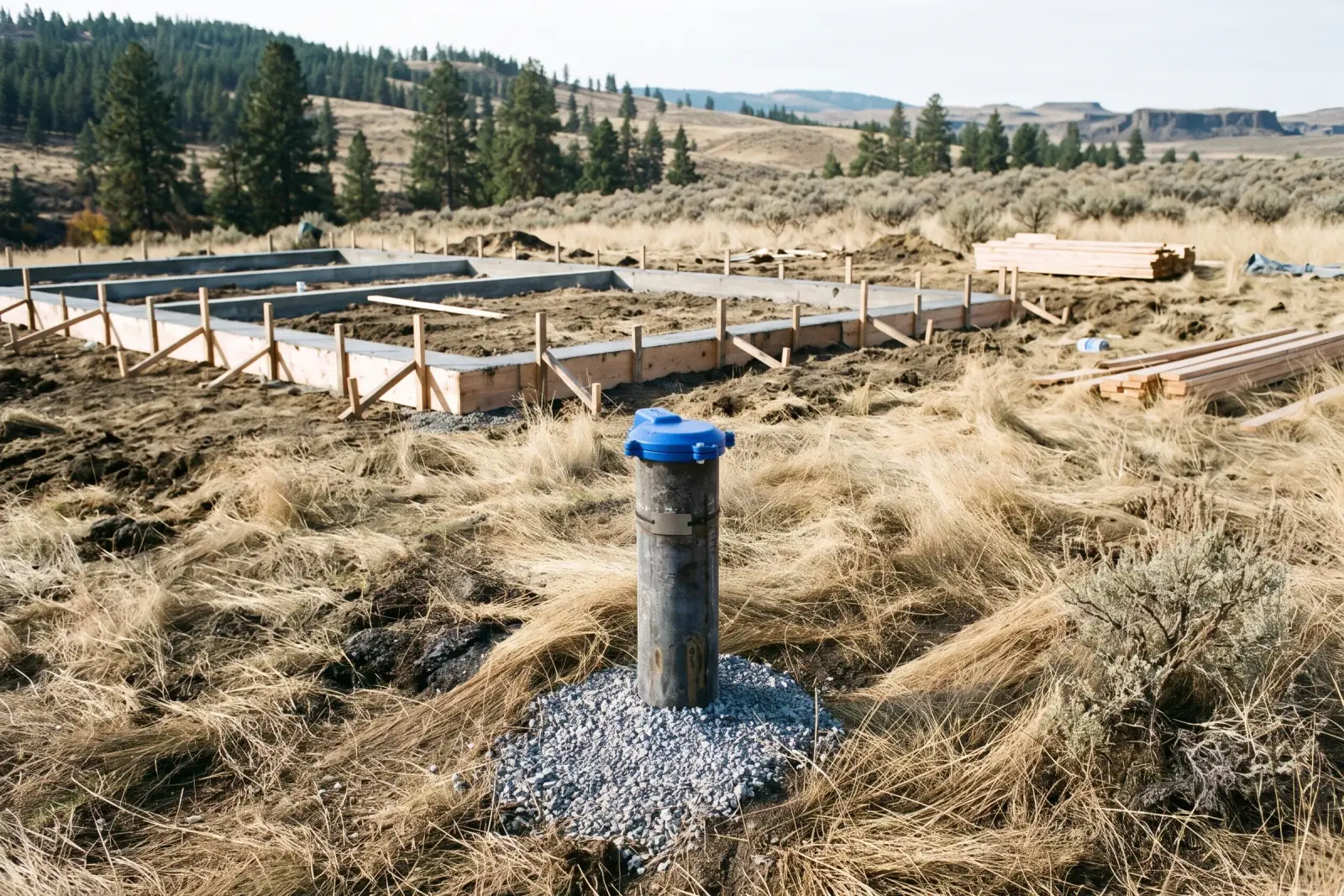
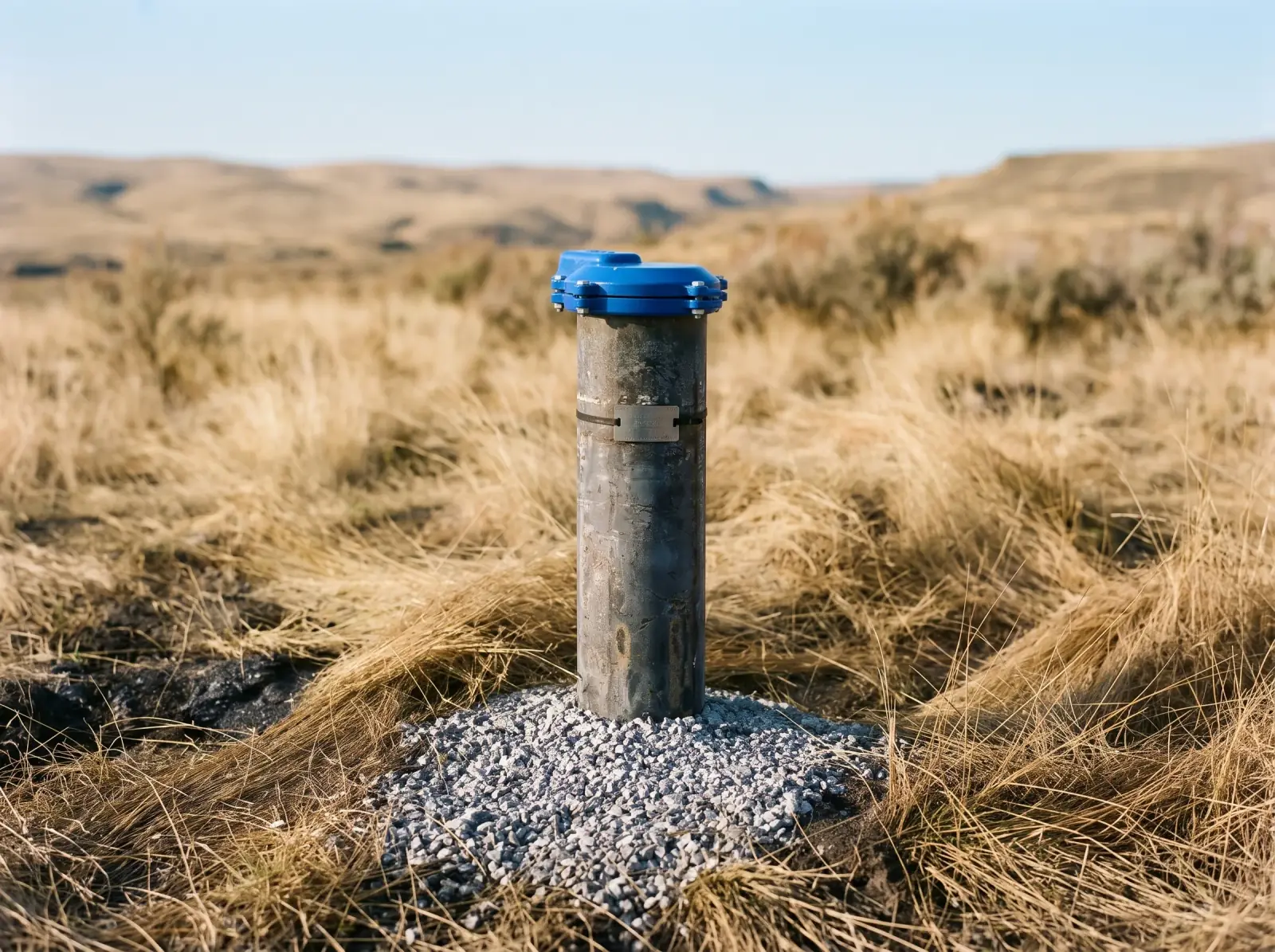
Every well has to meet the state's construction standards (WAC 173-160). They include a sealed annulus around the casing at least 18 feet deep to keep surface water out, casing that stands at least 6 inches above the ground, and a cap fastened to the casing. When the well is done, we file the well report with Ecology. It records the depth, what we drilled through, the static water level and the tested yield, and it's what your county will ask for. How to read a well report.
Testing Your Water
Beyond the tests your building permit requires, the Northeast Tri-County Health District recommends testing every year for coliform bacteria and nitrate, and notes that uranium is especially common in Stevens County. The state Department of Health also lists Spokane County among the counties with elevated uranium in some groundwater. It's worth doing once the well is in service.